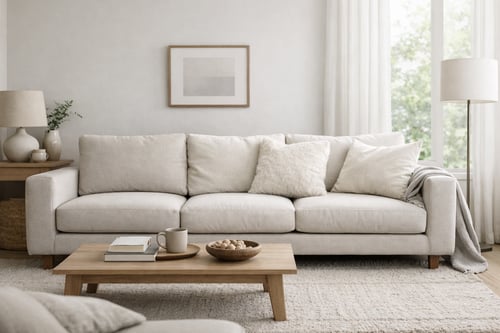
Choosing the best sofa filling dramatically affects your daily comfort and how well your sofa performs over years of use. The cushions beneath you determine whether you sink into plush softness, enjoy firm support or experience something in between. Foam, fibre and feather fillings each offer distinct characteristics affecting comfort, maintenance and longevity. Discover which filling delivers the comfort and durability you need!
Why sofa filling matters
Sofa filling determines fundamental aspects of your seating experience. The cushion filling material inside your sofa affects how it feels when you first sit down, how well it supports your body during extended use and how long cushions maintain their shape.
Key ways filling impacts your sofa experience:
- Initial comfort when you first sit down
- Body support during extended use
- Shape retention over months and years
- Maintenance requirements for daily upkeep
- Longevity and value for money
Different fillings age differently too. Understanding filling properties before purchasing prevents frustration and ensures your investment delivers expected comfort throughout its lifespan.
How sofa fillings affect comfort and support
Comfort preferences vary significantly between individuals. What feels supportive to one person feels uncomfortably firm to another. Sofa cushion filling creates these different experiences through material properties like density, resilience and compression characteristics.
How different fillings support your body
Your body weight distributes across cushion surfaces when you sit. Firmer fillings resist compression, maintaining position and providing support that prevents excessive sinking. This proves beneficial for back support and makes standing up easier. High-density foam offers this characteristic particularly well, maintaining structure under pressure.
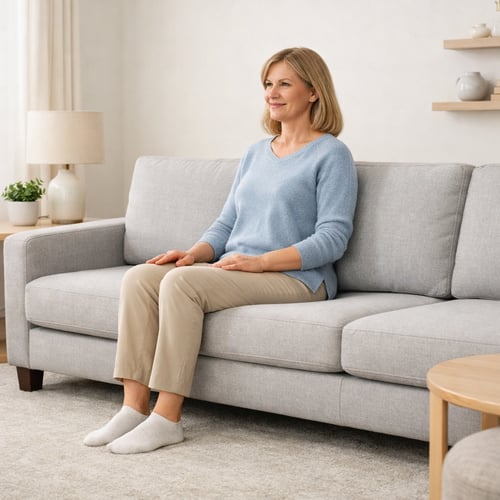
Softer fillings compress more readily, creating an enveloping sensation many describe as luxurious. This cushioning effect reduces pressure points but provides less structural support. Feather and down fillings exemplify this softer approach, moulding around your body rather than resisting it. For balanced comfort across larger seating arrangements, our corner sofas use carefully selected filling combinations that maintain consistent support throughout.
The main types of sofa filling
Three primary filling types dominate the furniture industry, each with distinct advantages and maintenance requirements. Understanding these helps you identify which aligns with your comfort preferences and lifestyle needs.
Foam filling
Foam remains the most common sofa filling due to its reliability and consistency. High-density polyurethane foam provides firm support that maintains shape excellently over time. Foam density directly affects quality - higher density foams last longer and resist compression better than lower density alternatives.
Foam filling characteristics:
- Consistent support that doesn't shift or clump
- Excellent shape retention over years of use
- Minimal maintenance beyond occasional vacuuming
- Available in various densities for different firmness levels
- Cost-effective for long-term durability
Memory foam variants add pressure-relieving properties, conforming gradually to body shape whilst maintaining support. Sofa foam quality varies significantly between manufacturers, so density specifications indicate longevity better than price alone.
Fibre filling
Fibre filling uses synthetic polyester fibres creating soft, plush cushions. This sofa stuffing provides gentle comfort that many find inviting and cosy. Fibre cushions feel lighter and softer than foam equivalents, offering flexibility that some prefer for casual lounging.
However, fibre compresses more easily than foam, requiring regular plumping to maintain appearance. Fibre cushions need reshaping after use to prevent permanent flat spots developing. Quality varies significantly - premium fibres maintain loft better than budget alternatives. Fibre proves popular in back cushions where support matters less than softness.
Feather filling
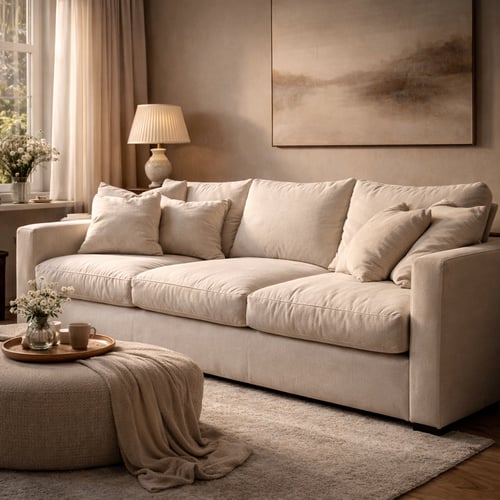
Feather and down filling creates luxuriously soft cushions that mould around your body. This traditional filling offers unmatched initial comfort and elegant appearance. Feathers compress substantially with use, often requiring professional refilling after several years. Allergy sufferers may react to feather content, making synthetic alternatives necessary despite feather's superior comfort characteristics.
Hybrid and mixed sofa fillings
Many quality sofas combine filling types to capture multiple benefits simultaneously. A common approach layers different materials - foam cores providing structure topped with fibre or feather for surface softness. This creates what is the best filling for sofa seat cushions for many buyers.
Popular hybrid combinations include:
- Foam core with fibre wrap for firm support plus soft surface
- Foam base with feather topper for luxury feel with stability
- Channelled foam with fibre filling preventing shifting
- Memory foam layers with traditional foam for pressure relief
These combinations balance the best filling for sofa cushions properties - support, comfort and maintenance requirements.
How to choose the best sofa filling for you
Selecting appropriate filling depends on how you use your sofa daily. Consider who sits on it, how often and for what activities. Family sofas enduring heavy daily use need different filling than occasional-use guest room seating.
What are the best cushions for a sofa?
The best cushions for sofa use balance support, comfort and durability based on your specific needs. High-density foam cushions excel for daily family use, maintaining shape through constant wear whilst providing reliable support. What are the best cushions for a sofa in guest rooms or occasional seating? Softer fibre or feather options create luxurious comfort without demanding intensive maintenance since they see lighter use.
Key factors when choosing sofa filling:
- Daily usage intensity and number of users
- Maintenance willingness and time available
- Body weight and support requirements
- Allergy considerations affecting material choices
- Budget for initial purchase and long-term maintenance
Firmer foam suits those prioritising support and minimal maintenance. Softer fibre or feather appeals to those wanting plush comfort who don't mind regular cushion care. Testing sofas in person helps significantly - sit for several minutes rather than briefly perching to gauge true comfort.
Finding your perfect cushion comfort
The best sofa filling to keep shape whilst providing comfort depends entirely on your individual needs and lifestyle. Foam delivers reliability and low maintenance, fibre offers soft affordability, whilst feather provides luxury requiring dedication. At Dako Furniture, we select filling combinations that prioritise long-term comfort and durability, ensuring your sofa remains inviting years after purchase. Consider testing different filling types before committing, and for larger configurations like u-shaped sofas, consistent filling quality across all sections ensures uniform comfort throughout. Explore our range to find the perfect balance of support and softness for your home!
FAQ about sofa filling explained
What sofa filling lasts the longest?
High-density foam lasts longest, typically maintaining shape and support for 10-15 years with proper care, whilst fibre and feather require more frequent replacement or refilling.
Which sofa filling is best for back support?
Firm, high-density foam provides best back support by resisting compression and maintaining posture, particularly important for those with existing back issues or spending long periods seated.
Do feather cushions go flat quickly?
Yes, feather cushions compress with use and require daily plumping to maintain appearance, though quality feather filling bounces back better than cheaper alternatives when properly maintained.
Explore more topics:
Author: Dako Furniture Team