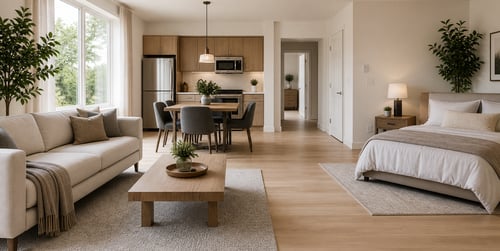
Moving into a new place is exciting, but blank rooms feel overwhelming once the boxes are unpacked. A furniture checklist for new home planning keeps you focused and stops you from buying three side tables before you own a sofa. This guide walks through every room so you know what matters first. Ready to turn an empty house into a proper home? Let's get into it!
What you'll learn:
- Room-by-room priorities - essentials vs extras for every space
- Realistic sizing - dimensions for beds, wardrobes, and sofas
- Budget pacing - how to split shopping into phases
- Small-space ideas - tricks for tight hallways and bathrooms
- Quick wins - items that make a place feel liveable in week one
Furniture checklist for a new home: where to start
Start with rooms you'll use every day - the bedroom and living room. It helps to begin by browsing our corner sofas collection, because a sofa sets the scale and affects what else fits around it. Measure the room before deciding on pieces.
What to consider before furnishing a new home
Write down three things first: room dimensions, natural light, and how you actually live. A bright room handles darker colours well; a narrow hallway needs slim pieces. If you work from home, a proper desk matters more than a second armchair.
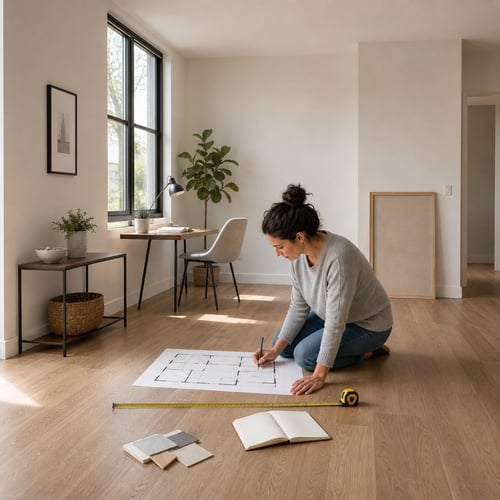
Plan storage from day one. New homes fill up fast, and a well-chosen wardrobe saves you from clutter within a month. Keep a running list on your phone and update it room by room.
Essentials vs extras – what do you really need?
Essentials are pieces you cannot live without: a bed, seating, a dining surface, and somewhere to store clothes. Extras improve comfort but can wait. Sorting your furnishing a new home checklist into two buckets stops impulse buying.
A useful rule of thumb for new buyers:
- Buy essentials first - bed, sofa, dining table, wardrobe
- Add storage next - bedside tables, shoe storage, organisers
- Layer comfort after - rugs, cushions, lamps, extra seating
- Save decor for last - art, mirrors, and accessories
This order spreads the spend across months.
Living room furniture checklist
The living room sits near the top of any new house checklist. A sofa, coffee table and TV unit form the core. Measure the longest wall first - it dictates the sofa size.
Essential living room furniture
A sofa is the anchor piece. Corner models work well in open-plan layouts, with widths running from 206 to 331 cm, so there's a fit whether your room is snug or generous.
Your living room essentials usually cover:
- A main sofa - two-seater, three-seater or corner
- Coffee table - round for tight spaces, rectangular for longer rooms
- TV unit - with storage if games or books need a home
- Lighting - one ceiling source plus a floor or table lamp
- Rug - large enough to sit under the front legs of the sofa
- Storage - a sideboard or shelving unit for everyday clutter
Skip anything that doesn't earn its place. A second armchair is lovely but not urgent.
Optional pieces to complete the space
Optional pieces add personality rather than function. An accent chair, a console, a bookshelf - none are day-one buys.
Quick tip: live with the essentials for a month before ordering extras. You'll spot what the space needs instead of guessing.
Bedroom furniture checklist
The bedroom is the other room you use every day. A bed, wardrobe, and chest of drawers are the non-negotiables. Sleep suffers when the room feels cluttered.
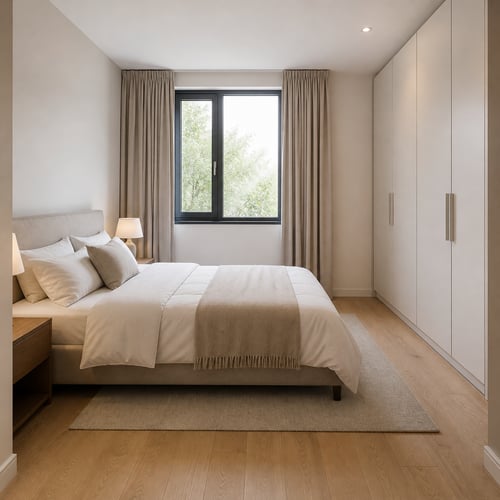
Must-have bedroom furniture
Start with a well-sized bed. Double beds usually measure 144-146 cm wide and king-size beds run 159-161 cm. Leave at least 60 cm of walking space on each side.
A wardrobe comes next. Widths range from around 75 cm to 310 cm. Sliding doors save space in narrow rooms; hinged doors work better when you want easy access to everything.
Extra items for comfort and storage
A chest of drawers handles folded clothes the wardrobe can't hold neatly. At Dako, our chests of drawers come in widths from 40 to 140 cm, so one slots easily under a window.
If storage is tight, look for a bed with built-in under-bed storage. A low bench at the foot of the bed is another quiet workhorse.
Kitchen and dining room essentials
Needs depend on whether your kitchen is separate or open-plan. Fitted kitchens already include cupboards, so focus on what sits outside them.
Key kitchen furniture
Most kitchens benefit from a small table or breakfast bar, a set of stools, and one piece of free-standing storage. A drop-leaf table gives dining space only when you need it.
Common kitchen add-ons worth planning for:
- Breakfast table - small, round or square, seats 2-4
- Bar stools - two or three if you have a counter
- Sideboard - for overflow crockery or pantry items
Keep the kitchen uncluttered. Every extra piece eats into the working area.
Dining area must-haves
Sizing the table right matters more than the look. Allow 60 cm of width per person and at least 90 cm between the edge and the wall, so chairs pull out comfortably.
Six chairs suits a family; four is plenty for a couple.
Home office furniture checklist
A dedicated home office is one of the most useful new house essentials and belongs on any furnishing checklist. The space doesn't need to be large - a corner of the bedroom works - but the furniture has to earn its spot.
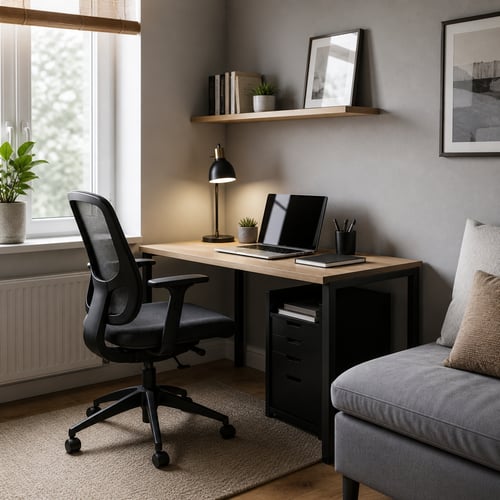
Basic home office setup
Three items cover the basics: a desk, a proper chair, and one piece of storage. A desk between 100 and 140 cm wide suits most setups.
If the office shares a room, pick a desk that tucks away. A console-style desk under a window doubles as a console table after hours.
Furniture for productivity and comfort
Think about lighting. A desk lamp with an adjustable arm makes a real difference on dark afternoons.
Avoid buying everything at once - a week in the space shows what's missing.
Bathroom and storage essentials
Bathrooms rarely need traditional furniture, but a few small pieces make daily routines easier. Storage is the main concern.
Practical storage solutions
A slim cabinet, over-toilet shelf, or mirrored wall unit usually solves bathroom clutter. Choose materials that cope with humidity - sealed MDF, treated wood, or metal frames.
Think about where the following items live:
- Towels - shelf, ladder rail or basket
- Toiletries - a mirrored cabinet keeps everything out of sight
- Cleaning supplies - a small under-sink cupboard if plumbing allows
- Laundry - a hamper in the bathroom or on the landing
Three small solutions usually beat one cabinet that dominates the room.
Small furniture and accessories
A wooden stool doubles as a plant stand and a place for clean towels. A freestanding ladder rail warms and dries towels at once.
If space is tight, go vertical. Wall-mounted shelves or tall, narrow cabinets give storage without stealing floor space.
Hallway and entryway furniture
Hallways are often planned last, but they shape the first impression. Even a narrow corridor works with a few well-chosen pieces.
Functional entryway essentials
A shoe cabinet, a coat rack, and a small tray for keys cover the basics. If the hallway is wide enough, add a slim console with a mirror above.
Measure before you buy. Depth under 30 cm is usually the sweet spot for corridors.
Space-saving ideas
Wall-mounted pieces are the hallway's best friend. Floating shoe cabinets and hooks with a shelf above work hard without taking floor space.
Final tips for furnishing a new home
Furnishing a new home is a marathon, not a sprint. Tackle essentials first, live in each room before adding extras, and don't be afraid to leave a space half-dressed for a few weeks. Our bedroom and living room ranges at Dako are designed for everyday use - browse when you are ready to tick off the bigger pieces on your list.
How to prioritise what to buy first
Prioritise by how often you'll use the piece and how hard it is to live without it. Bed first, sofa second, dining table, then storage. Your things to buy for a new house list will shift as you settle in. Keep measurements handy.
Explore more topics:
Author: Dako Furniture Team