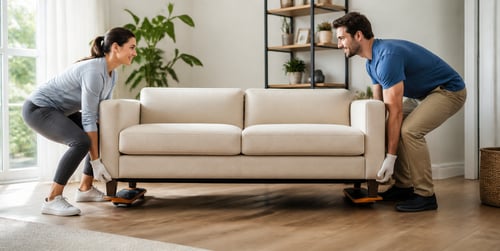
Shifting a wardrobe or sofa can feel daunting, and one wrong move risks a sore back or scratched floors. With the right prep and a few simple tools, most heavy pieces shift without drama. This guide walks you through what to do before and during the move. Read on!
What you'll learn:
- Safe preparation - measuring routes and choosing kit
- Solo techniques - shifting pieces without strain
- Essential tools - sliders, straps and dollies
- Floor protection - keeping floors scratch-free
- When to hire help - when a pro is worth it
How to move heavy furniture safely and easily
Mastering how to move heavy furniture safely comes down to planning, lifting with your legs and letting equipment do the work. Pieces like wardrobes, beds, and corner sofas are awkward as well as heavy. Measure the item and your doorways first.
Why moving heavy furniture can be dangerous
Moving heavy furniture the wrong way causes back strain, crushed fingers and floor damage. Wardrobes, bed frames and corner sofas often weigh over 50 kg assembled, and the weight is rarely balanced.
How to prepare before moving heavy furniture
A bit of prep makes the whole move safer. Fifteen minutes of route-checking and gathering tools usually saves you from the worst surprises.
Measure doorways and plan your route
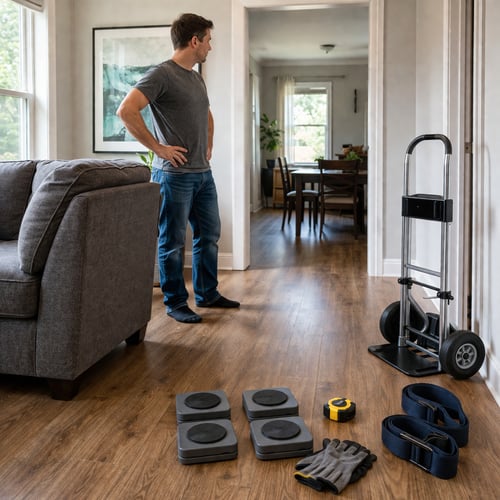
Before moving anything, grab a tape measure and note the widest and tallest points, then compare with every doorway on the route. A standard internal door is around 76 cm wide.
Clear the space and protect your floors
Clear rugs, lamps and fragile items from both rooms and the corridor. Leave a path at least as wide as the furniture plus 20 cm.
Protection by flooring type:
- Hard floors - felt pads or cardboard under every contact point
- Carpet - hard plastic sliders that glide over pile
- Tiles - doubled-up blankets so grit cannot scratch
- Doorways - a folded towel over the metal strip
Cover delicate corners with towels or bubble wrap.
Gather the right equipment
The proper kit turns a two-person job into a one-person job. Sliders cost next to nothing, straps shift the load to your legs, and a dolly handles the rest.
How to move heavy furniture by yourself
The answer to how to move heavy furniture by yourself is the right kit - sliders, straps, and good technique cover most items under 70 kg. Tips on how to move furniture alone really start with being honest about your limits.
Use proper lifting techniques
Bend at the knees, keep the back straight and hold the load close to your body. Never twist while lifting - pivot with your feet.
Slide instead of lift whenever possible
Sliding takes far less effort than lifting. Tilt the piece enough to tuck a slider under each leg, then push.
Good candidates for sliding:
- Wardrobes on flat floors
- Chests of drawers once drawers are removed
- Three-seater sofas across rooms without thresholds
- Bed frames fully or partly assembled
- Bookcases with contents removed
At a carpet edge, lift the leading edge just enough to clear it.
Take apart furniture if you can
Taking a piece apart can turn an impossible move into a manageable one. Wardrobe doors, sofa legs and headboards are designed for self-assembly, like ours at Dako Home.
Best tools for moving heavy furniture
The most useful tools are sliders, straps, a dolly, and ratchet straps. Together they cover almost any heavy move.
Furniture sliders
Sliders are small pads - hard plastic for carpet, soft felt for hard floors. They tuck under each leg and let the piece glide. Look for sliders rated to at least 100 kg.
Moving straps and lifting belts
These straps shift weight onto the shoulders and thighs instead of the arms. A two-person harness suits wardrobes and sofas, while a single-person forearm strap works for chests and boxes.
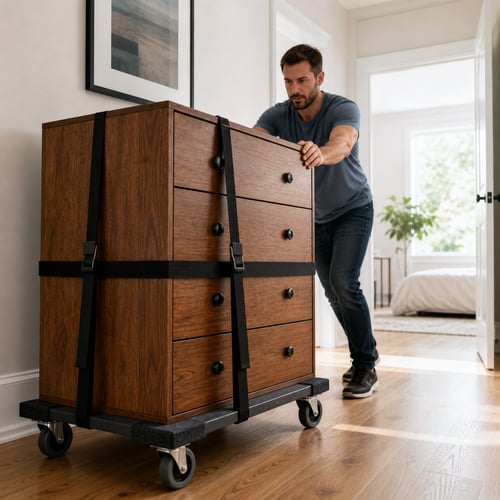
Dollies and trolleys
A four-wheel dolly turns a full chest of drawers into a push-along. Quick tip: always strap the load to the trolley.
Step-by-step: how to move heavy furniture safely
A clear order of steps takes most of the risk out of it. Follow these four steps.
Step 1: Plan your move
Walk the route with a tape measure. Note the narrowest point and sharpest turn.
Step 2: Lift correctly
Feet shoulder-width apart, bend the knees, back straight. Lift with your legs in one smooth motion, piece close to the torso.
Step 3: Move slowly and carefully
Walk at half pace with small steps. Stop every couple of metres if the load is heavy. At corners, pause and re-grip.
Step 4: Place furniture safely
Lower the item slowly, bending the knees as you go. Slide it into place and check every leg for damage.
How to move heavy furniture without damaging floors
Protect the floor first and never drag furniture without something underneath. Felt pads, cardboard or plastic sliders all work depending on surface. Heavy pieces need extra protection on bare floors, even if they already have soft feet.
Common floor types and what to use:
- Laminate - felt pads or cardboard, never rubber
- Solid wood - thick blankets or felt sliders
- Carpet - hard plastic sliders for pile
Lift rather than drag at thresholds and tile joins.
Common mistakes to avoid when moving heavy furniture
The biggest mistakes are skipping preparation, lifting with the back, and shifting pieces too heavy for one person.
Mistakes that cause the most damage:
- No measurement - piece will not fit mid-carry
- Loose drawers - sliding onto floors or toes
- Bare-floor dragging - permanent scratches
- Twisting lifts - rotating torso while holding weight
- Rushing corners - swinging through a pivot
When to ask for help or hire professionals
Call for help when a piece is too heavy to lift comfortably, the route has narrow stairs, or the item is valuable. A two-seater on one floor is a solo job with sliders, but a king-size bed upstairs needs two. Dako Home builds beds, wardrobes, and sofas for self-assembly, which keeps future moves manageable. And if in doubt - rope in a friend before you start.
Explore more topics:
Author: Dako Furniture Team