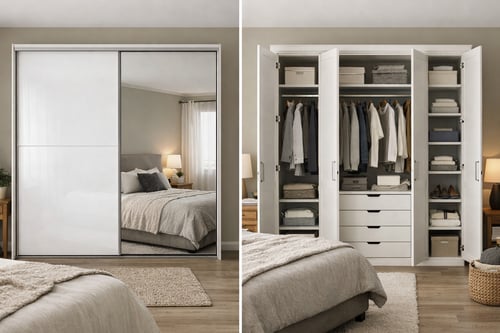
Choosing between sliding wardrobes vs hinged designs shapes how your bedroom functions and feels! Both options offer distinct advantages depending on your space, style preferences, and daily routine. Understanding the practical differences helps you make the right choice for your home. From door swing clearance to internal accessibility, each type presents unique considerations. This comparison explores everything you need to know about both wardrobe styles to find your perfect match.
What are sliding wardrobes? Key features and benefits
A sliding door wardrobe uses panels that glide horizontally along tracks rather than swinging outward. This space-saving design works brilliantly in compact bedrooms where floor space is precious. The doors slide smoothly past each other, requiring zero clearance in front of the wardrobe.
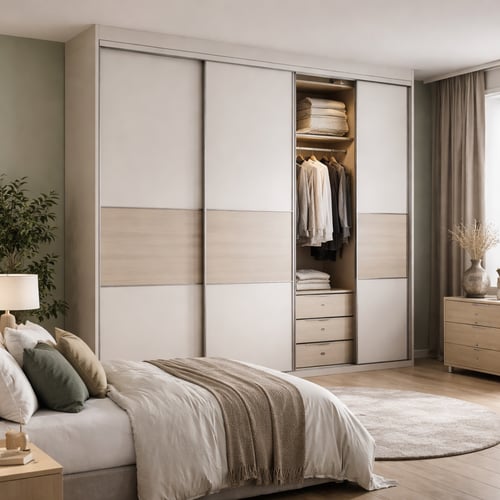
Modern sliding systems operate quietly and smoothly with quality roller mechanisms. Soft-close technology prevents doors slamming, protecting both the wardrobe and your peace of mind. Many designs incorporate mirrors on door panels, which visually expand small rooms while eliminating the need for separate mirror furniture. At Dako, our collection of sliding door wardrobes combines sleek aesthetics with practical functionality for contemporary bedrooms.
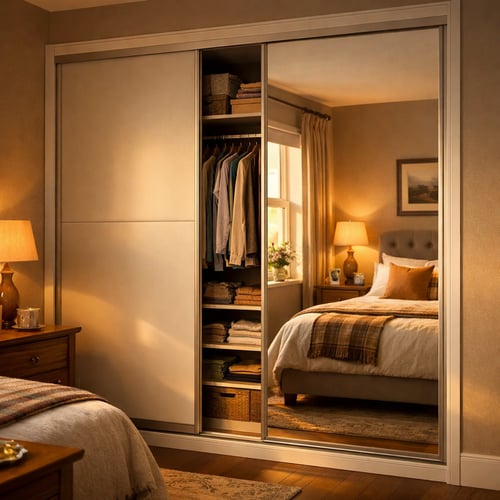
Key advantages of sliding wardrobes:
- No clearance needed in front of wardrobe
- Space-efficient for compact bedrooms
- Modern, streamlined appearance
- Often feature full-length mirrors
- Smooth, quiet operation with quality tracks
Internal access considerations
Sliding wardrobes have one notable limitation – you can only access half the interior width at any time. When one door slides across, it covers the section behind it. However, thoughtful internal organisation with clearly defined zones minimises this issue significantly.
What are hinged wardrobes, how do they work, and what are their advantages?
A hinged door wardrobe features traditional doors that swing outward on hinges attached to the frame. This classic design offers immediate access to the entire wardrobe interior. Opening both doors provides an unobstructed view of all your clothes, making outfit selection quicker and easier.
Hinged wardrobes suit larger bedrooms with ample circulation space. The doors need clearance to swing fully open – typically 60-90cm depending on door width. This requirement means furniture placement needs careful planning to avoid blocking door operation.
Benefits of hinged door wardrobes:
- Full interior access when doors open
- Traditional, timeless aesthetic appeal
- Sturdy, reliable construction
- Easy to repair or replace hinges
- Works with various internal configurations
Space requirements: which wardrobe saves more space?
Sliding wardrobes definitively save more physical floor space. The doors require zero swing clearance, making them perfect for rooms where every centimetre counts. You can position beds, chairs, or other furniture much closer to sliding wardrobes without blocking access.
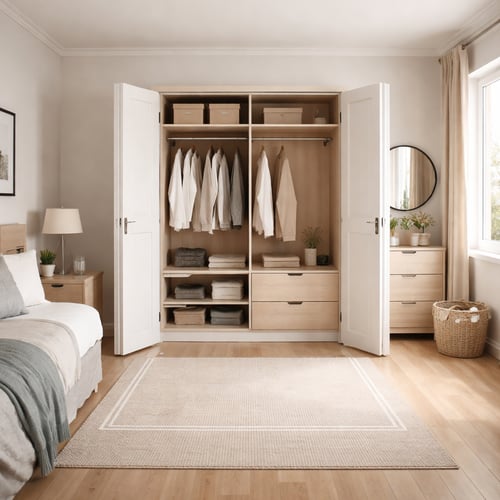
Hinged wardrobes need dedicated clearance zones. Measure at least the door width plus 10-15cm beyond for comfortable opening. In practice, this means a 60cm door needs roughly 70-75cm of clear space. This requirement limits furniture placement options and can make small rooms feel cramped.
Space comparison checklist:
- Measure your bedroom's width and length
- Note furniture placement and circulation paths
- Calculate clearance needed for hinged doors (door width + 15cm)
- Consider whether you can position bed/furniture closer with sliding doors
- Think about daily movement patterns in the room
- Account for future furniture additions or layout changes
Design and aesthetics: which option looks better in modern interiors?
Sliding vs hinged wardrobe doors create distinctly different visual impacts. Sliding wardrobes deliver sleek, contemporary aesthetics that suit modern and minimalist interiors beautifully. The flush, frameless appearance creates clean lines that feel current and sophisticated. Mirrored panels amplify this effect, bouncing light around the room and making spaces feel larger.
Hinged wardrobes bring traditional warmth and character that works wonderfully in classic, country, or transitional bedroom styles. The visible door frames and handles offer opportunities for decorative details like moulding, panelling, or distinctive hardware. For period properties or homes with traditional architecture, hinged wardrobes often feel more contextually appropriate.
Cost comparison: sliding wardrobes vs hinged
Initial purchase costs vary significantly between styles. Hinged wardrobes generally cost less upfront due to simpler mechanisms and standard manufacturing processes. Basic hinged models start from very affordable price points, making them accessible for budget-conscious buyers.
Sliding wardrobes typically command higher prices reflecting their track systems, roller mechanisms, and often larger door panels. Quality sliding hardware costs more than standard hinges, and installation may require professional expertise. However, the space-saving benefits and modern aesthetics justify the premium for many buyers.
Cost factors to consider:
- Initial purchase price and installation costs
- Quality of tracks, rollers, or hinges
- Replacement parts availability and pricing
- Professional installation requirements
- Long-term durability and maintenance needs
Which wardrobe doors are better for your home?
The best wardrobe doors UK homes can choose depend entirely on individual circumstances, rather than one type being universally superior. Sliding wardrobes excel in compact spaces, modern aesthetics, and situations where furniture positioning flexibility matters. They create contemporary, streamlined looks while maximising usable floor space efficiently.
Hinged wardrobes suit larger bedrooms, traditional decor styles, and anyone who values full interior visibility and access. The complete opening provides better organisation oversight and quicker daily use for many people. If space permits, the practical advantages of hinged doors often outweigh the floor space they require. We offer a comprehensive range of wardrobes in both sliding and hinged configurations to suit every bedroom style and size.
Maintenance and durability considerations
Maintenance needs vary depending on the design: sliding wardrobes require regular track cleaning and roller lubrication for smooth movement, while hinged wardrobes simply need occasional screw tightening or inexpensive hinge replacements. Although sliding systems are highly durable, the simpler mechanism of hinged doors offers fewer failure points and easier long-term repairs.
Which style suits your bedroom best?
Assess your specific bedroom dimensions, layout constraints, and personal priorities when choosing between these wardrobe styles. Consider how you actually use your wardrobe daily – do you need to see everything at once, or are you comfortable with sectioned access? Think about your room's style and whether contemporary or traditional aesthetics suit better. The right choice depends on balancing space availability, budget, and daily convenience to create a bedroom that works perfectly for your lifestyle!
Explore more topics:
Author: Dako Furniture Team