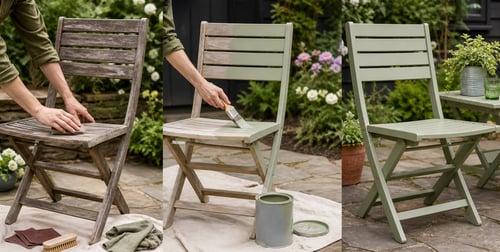
A fresh coat of paint can bring tired garden chairs, tables, and benches back to life - often for less than replacing them. The trick is in the prep: sanding and priming carry most of the weight. This guide walks through the tools, paints, and order of steps for a smooth, weather-resistant finish. It also covers wood, metal, and rattan. Read on to get it right the first time!
Here's what matters:
- Proper preparation - sanding and cleaning matter more than the paint itself
- Choose the right paint - exterior-grade, UV-stable, suited to the material
- Apply thin coats - two or three light layers beat one heavy one
- Seal the finish - a clear topcoat protects against rain, sun, and frost
- Adapt to the material - wood, metal and rattan each need their own approach
What you need before painting garden furniture
Good results start with the right kit on the table. Painting garden furniture works best when sanding, cleaning, and priming are done in order. This applies whether you are refreshing a set of rattan garden furniture, a wooden bench, or a metal bistro table. Set up in a dry, sheltered spot with decent airflow.
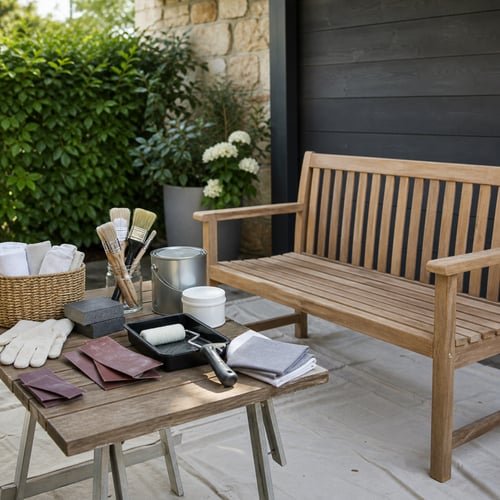
Essential tools and materials
The essentials fall into three groups: prep, application, and protection. Sandpaper and cleaner handle prep, brushes or a spray gun handle application, and a clear sealant handles protection.
Tools and materials to have to hand:
- Sandpaper in medium and fine grits (80 and 180 work well)
- Wire brush for flaking paint or light surface rust
- Sugar soap plus a bucket and a sponge
- Primer matched to the material (wood, metal, or multi-surface)
- Exterior paint in your chosen colour and finish
- Brushes and a small roller for clean application
If you plan to spray rather than brush, add a basic HVLP spray gun and a respirator mask. Sprayers give a smoother finish on intricate pieces.
Choosing the best paint for garden furniture
The best paint for garden furniture is an exterior-grade product with UV resistance and flexibility, because outdoor surfaces expand and contract with the weather. Water-based acrylics cover cleanly and dry fast. Oil-based enamels give a harder, glossier finish and hold up well on metal.
Common paint types and where they shine:
- Acrylic exterior paint - flexible, low-odour, great for wood and rattan
- Oil-based enamel - tough and glossy, ideal for metal frames
- Chalk paint with a sealant - soft, matt look for a shabby-chic style
- Spray paint for metal - quick coverage on ornate wrought-iron pieces
Whichever option you pick, check the label for "exterior use" and look for UV protection. Anything for indoor walls will fade and flake within a season.
How to prepare garden furniture for painting
Preparation is where the finish is actually made. Getting how to paint garden furniture right comes down to stripping flaking layers, washing off grime, and giving the surface a key for the new paint. Skip any of these, and the top coat will peel within months.
Start by brushing off loose debris, then wash the piece with sugar soap and warm water. Rinse and let it dry fully. Once dry, sand thoroughly to remove flaking paint, working from coarse to fine grit. Wipe off the dust, then apply a suitable primer and let it cure for the time stated on the tin.
How to paint garden furniture step by step
Painting outdoor furniture follows a simple rhythm: primer, first coat, light sand, second coat, seal. Each layer needs to be thin and even. Pick a warm, dry day and avoid direct midday sun - it can cause bubbling.
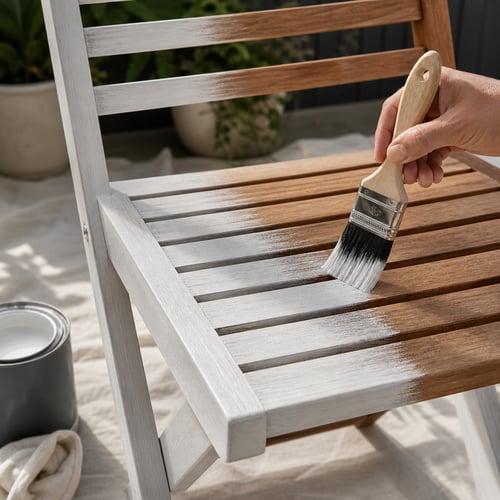
Applying the first coat
Load your brush sparingly and work with the grain on wood or along the tubing on metal frames. The first coat should look slightly patchy - that's normal, since this layer is mostly about helping later coats stick. If spraying, hold the nozzle 25 to 30 cm from the surface and move in smooth passes.
Drying and applying additional coats
Let the first coat dry for the time stated on the tin, usually four to twenty-four hours. Once dry, lightly key the surface with fine sandpaper (around 240 grit) and wipe off the dust.
Apply two thin coats rather than one thick one - you get a smoother, longer-lasting finish with much less risk of runs. Repainting garden furniture that was previously a dark colour may need an extra coat to cover fully.
Sealing and protecting the finish
A clear exterior sealant locks in the colour and protects against rain, UV and wear. Once your final coat has cured for at least 24 to 48 hours, apply a water-based polyurethane or outdoor varnish with a clean brush.
Quick tip: For tabletops and armrests, go for a satin or semi-gloss sealer - it sheds water better than matt and wipes clean more easily.
How to paint different types of garden furniture
Different materials need slightly different approaches, but the logic stays the same: clean, prep, prime, paint, seal. Wood needs sealing, metal needs rust-proofing, and rattan needs a gentle touch. Our garden range at Dako covers rattan sets, table and chair combinations, and sofa sets.
How to paint wooden garden furniture
Sand back cracked varnish or silvered timber to expose fresh wood. Wash with sugar soap and let the piece dry for a full day - damp timber leads to bubbling. Painting wooden garden furniture then needs a wood primer, two coats of exterior acrylic or oil-based paint, and a clear outdoor sealant to finish.
How to paint metal garden furniture
Tackle rust first, because paint over corrosion flakes off as it spreads. Use a wire brush or rust-remover gel to strip orange patches down to bare metal, then wipe with a solvent cleaner. How to paint metal garden furniture that lasts comes down to a rust-inhibiting primer finished with oil-based enamel or metal spray paint.
Can you paint rattan furniture?
Yes - and spray paint is the easiest way to get even coverage across the weave. Natural rattan needs a light sand with fine paper, followed by a vacuum to clear dust. Synthetic resin rattan should be wiped with sugar soap and left to dry.
Best approach for rattan:
- Use a spray primer designed for plastic or multi-surface use
- Build up coverage with several light passes rather than one heavy coat
- Rotate the piece to reach the underside of each strand
- Seal with a clear outdoor varnish to protect against UV fading
- Avoid thick brush coats that pool in the weave and crack over time
Synthetic rattan takes paint well because it is already UV-stable. Natural rattan is more forgiving on application but needs a tougher sealant.
Tips for a long-lasting finish on outdoor furniture
A painted finish lasts longer when you treat it as part of a routine. Give painted pieces a quick wash each summer, touch up chips before rust sets in, and cover furniture through the wettest winter months. At Dako, our garden range is there when the painting feels like more work than the furniture deserves - rattan sets, dining combinations, and sofa sets, ready to go. With the right prep, a proper weather-resistant finish will see you through several seasons.
Explore more topics:
Author: Dako Furniture Team