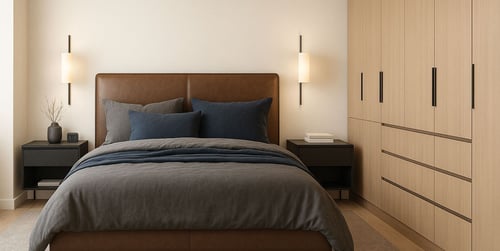
Furniture bought one piece at a time tends to take whichever wall is still free. Working out how to arrange bedroom furniture before anything arrives keeps that from happening. The bed and the space every door and drawer needs come first, and the other pieces fit around them. Read on for layout ideas that keep the whole room easy to use!
Planning a bedroom around the bed:
- Measure first - doors, windows, radiators and sockets go on one sketch before any furniture is chosen
- Sliding or hinged - sliding wardrobe doors suit a narrow gap beside the bed, hinged ones need a clear swing
- Dako bedroom sets - matching pieces, with a different line-up in each set
- Small rooms - fewer pieces, under-bed storage and slim bedside tables keep the floor clear
What should you consider before planning a bedroom layout?
Start with a measured sketch that marks everything you cannot move: the door and the way it opens, windows, radiators, sockets and any built-in cupboards. Add the bed next, drawn at its overall size. Beds take up more floor than the mattress, because the bed frame and headboard add width and length, so a double that takes a 135 × 190 cm mattress needs a bigger rectangle on paper.
Questions to answer before you move anything:
- Who sleeps here - a couple usually needs access from both sides, a single sleeper can give one side up
- What you store - hanging clothes call for wardrobe space, folded ones for drawers
- Window position - tall furniture in front of it blocks light, and a radiator below it should stay uncovered
- Other uses - a desk or dressing table needs its own corner and room for a chair
These answers shape the bedroom furniture layout more than style does, so colours and finishes can wait until the plan works on paper. Quick tip: before deciding how to arrange your bedroom, mark the outline of the bed on the floor with masking tape, then walk around it and open the room door. A few minutes of this shows whether the space left over feels comfortable before anything heavy is delivered.
How to mix and match bedroom furniture (and when to choose a bedroom set)
Pieces from different ranges look planned when they share at least one feature: a colour, a material or a shape. Start from what stays, such as an existing bed, and choose the rest to echo it, for example white fronts with one pale wood tone. Size matters too, as a tall wardrobe beside a low bed looks unbalanced.
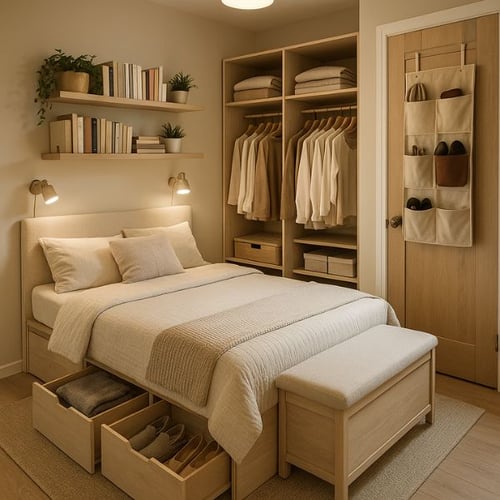
Bedroom sets take the matching out of your hands. At Dako, the line-up varies from set to set: one set combines a wardrobe, a chest of drawers and two bedside tables, another a sliding wardrobe, a chest of drawers and a sideboard. A set suits a room furnished from scratch, but each piece still has to fit your sketch, so check the measurements of all of them.
Beds first: how to position your bed frame for optimal comfort
Put the headboard against a solid wall and leave walking room along both long sides if two people share the bed, so nobody climbs over a partner at night. Centring the bed on that wall also leaves room for a bedside table on each side. Pushing one long side against a wall frees floor, but makes the bed harder to make and suits a single sleeper better than a couple.
Spots that tend to cause problems for a bed:
- Under a window - draughts from the glass reach your head and curtains get caught behind the headboard
- Against a radiator - the bed frame blocks the heat from reaching the room
- In the doorway - the door stops against the frame before it opens fully
- By the wardrobe - its doors and drawers no longer open all the way
- Sloping ceiling - sitting up to read becomes awkward
If you follow feng shui, its command position puts the bed against a solid wall with a view of the door. That only helps as long as you can still get round both sides of the bed. Leave a clear stretch of floor at the foot of the bed as well, so you can walk past it to a chest of drawers on the wall opposite.
Wardrobes, chests of drawers and bedside tables: where to place each piece
Each piece goes where it is used and where it can open fully: the wardrobe on the longest free wall, the chest of drawers where you get dressed, the bedside tables within reach of the pillows. Before fixing any position, picture every door and drawer open - or test it on the tape outline - and check there is still space to stand in front of it.
Where to put a bedroom wardrobe
Wardrobes need the longest unbroken wall, ideally one the room door does not open towards. A hinged door needs clear floor in front of it at least as wide as the door itself, plus room to step back, while sliding doors skip that swing but still need space to reach the rail and shelves. A mirrored front opposite the window bounces light around a darker room.
Where to place a chest of drawers
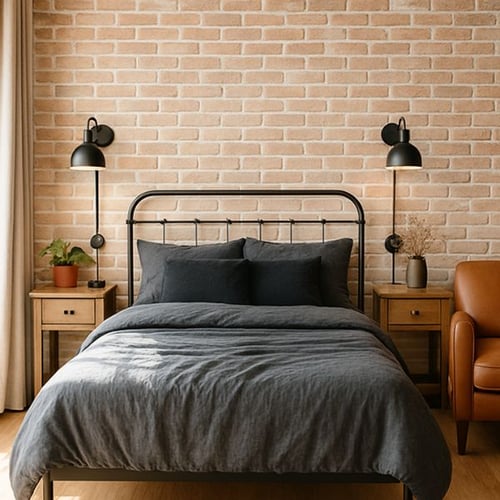
A chest of drawers works well next to the wardrobe, so getting dressed happens in one corner, or opposite the bed, where its top can hold a mirror or a lamp. Leave enough floor for the deepest drawer pulled fully out and for you to stand or kneel in front of it. Under a window, a low chest keeps the light, while a tall one belongs on a solid wall.
How to place bedside tables
Bedside tables sit beside the pillows, roughly level with the top of the mattress, so a glass of water or a phone is within reach lying down. If the bed has drawers underneath, check that the bedside tables leave them room to pull out, a detail that is easy to miss when the two are bought separately. Matching heights on both sides keep a double bed looking balanced.
Bedroom storage solutions: how to keep bedroom clutter-free
A bedroom stays clutter-free when everything has a set place close to where it is used. Start by taking out what does not belong in the room, then group what stays, with clothes, bedding, books and chargers each in their own spot. The storage solutions that matter most are the ones for things you would otherwise leave on a chair or the floor.
Places that hold more than they seem to:
- Under the bed - a storage bed or drawers beneath it hold bedding and out-of-season clothes
- Inside the wardrobe - shelves and boxes above the rail use the height that hanging leaves empty
- Bedside drawers - chargers, glasses and books stay off the top surface
Secure tall wardrobes and chests of drawers to the wall, following their instructions, especially where children might climb on open drawers. Keep the top of each piece for a few things you use daily, because a surface piled with clothes undoes the work of all that storage.
How to arrange furniture in a small bedroom
In a small bedroom, the bed goes where it leaves the widest clear path from the door, and every other piece should open without blocking that path. Knowing how to arrange furniture in a small bedroom usually means fewer pieces that do more. Most bedroom layout ideas for tight rooms rely on a storage bed, a sliding wardrobe and slim bedside tables.
Where the bed goes in a small room
Try a corner position with one long side against the wall before ruling it out. For a single sleeper, this frees a strip of floor wide enough for a wardrobe or a desk. A couple loses easy access on one side, so a bed centred on the headboard wall is usually worth the lost space, even if one bedside table shrinks to a shelf.
Furniture that saves floor in a small room
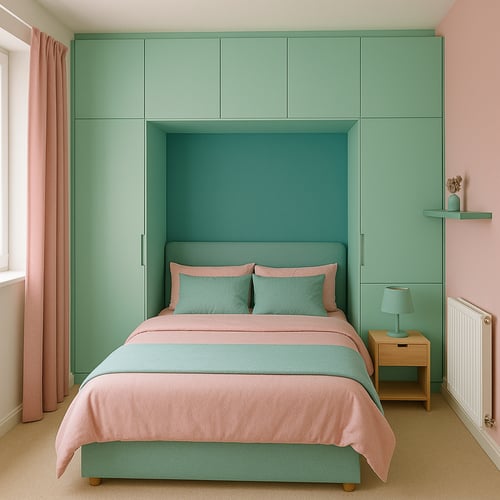
Sliding wardrobe doors need no swing, which matters when the gap between bed and wardrobe is narrow. A storage bed can take over from a chest of drawers for bedding and spare clothes. Wall shelves and a slim bedside table keep more of the floor visible, and light colours on large fronts make the room feel less boxed in.
Doors and drawers decide whether a layout works
A layout that looks fine on paper can still fail by a few centimetres once the fronts open. Before buying a wardrobe or chest of drawers, measure from the bed’s outline to the planned wall and check the gap covers an open door or a pulled-out drawer, with a little floor to spare. Many of our wardrobes at Dako have sliding doors for spots where a hinged door cannot swing, and some of our beds have storage underneath for rooms with no wall left for a chest of drawers.
Author: Dako Furniture Team