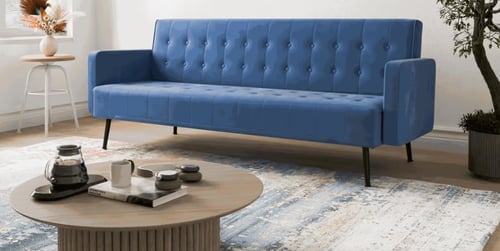
Most people use the words interchangeably without giving it a second thought - and honestly, that is completely understandable. But the difference between a sofa and a settee is one of those small details that reveals quite a lot about language and how we think about the spaces we live in. If you have ever wondered which word is "correct" - or whether it even matters when shopping for new seating - read on, because the answer is more useful than you might expect!
Settee vs sofa: is there actually a difference?
In everyday use, a settee and a sofa refer to exactly the same thing: an upholstered seat for two or more people, with a back and arms. The settee vs sofa debate is almost entirely linguistic rather than functional - no manufacturer produces a „settee" that looks or behaves differently from a „sofa". What separates the two words is regional habit and generation. Neither word is wrong - and sofas themselves are identical regardless of what they are called.
What is a settee - and why does the word still come up?
If you have ever asked yourself what is a settee and why it keeps appearing in conversation, the answer lies in history and habit. The word settee has been in use since the early 18th century and carries a warmth and familiarity that many people in Britain genuinely prefer. The settee meaning has shifted considerably over time - from a formal, high-backed bench found in drawing rooms to the relaxed, comfortable seating that defines modern living spaces. Sofa, meanwhile, is the more widely recognised term in retail, which makes it the more practical starting point when searching online.
Some of the most noticeable differences in how the two words are used:
- Region - settee is more common in the north of England, sofa dominates in the south
- Generation - older speakers tend to favour settee, while younger generations default to sofa
- Retail context - sofa is almost universally used in product listings and furniture retail
- Informal speech - settee carries a domestic, familiar tone that many people find natural
Sofa types: what to look for before you buy
Whether your search starts with „settee or sofa", understanding the main types available makes the process considerably easier. The right choice depends on the size of your room, how many people use it regularly, and whether the sofa needs to do more than just provide seating. It is also worth thinking about the longer term - a sofa tends to stay in a room for years, so getting the type right from the start matters more than most people initially expect.
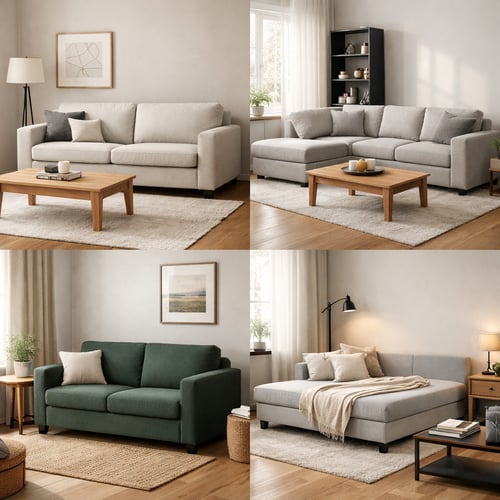
The most common types of sofas to consider:
- Two-seater sofas - compact and versatile, ideal for smaller rooms or as a secondary seat alongside a larger piece
- Three-seater sofas - the most popular choice for living rooms, offering generous seating without dominating the space
- Corner sofas - excellent for maximising seating in larger rooms, often with a sleeping function built in
- Sofa beds - practical for guest rooms or smaller homes where space needs to work harder
- Armchairs - often bought alongside a sofa to complete a cohesive seating arrangement
Which sofa works best for a living room?
The answer depends largely on the dimensions of your room and how you use it day to day. A three-seater sofa suits most standard living rooms and works well as a standalone piece. Larger rooms benefit from a corner sofa, which defines the space and creates a natural focal point without leaving awkward gaps. For smaller rooms, a two-seater paired with one or two armchairs often keeps the layout more flexible and avoids overcrowding.
How fabric and colour affect the final result
Fabric and colour play a significant role in how a sofa sits within a room. Lighter tones make a space feel more open and airy, while darker shades add warmth and tend to be more forgiving with everyday wear. If you are uncertain about which direction to go, it is worth seeing fabric samples in your actual room before making a final decision.
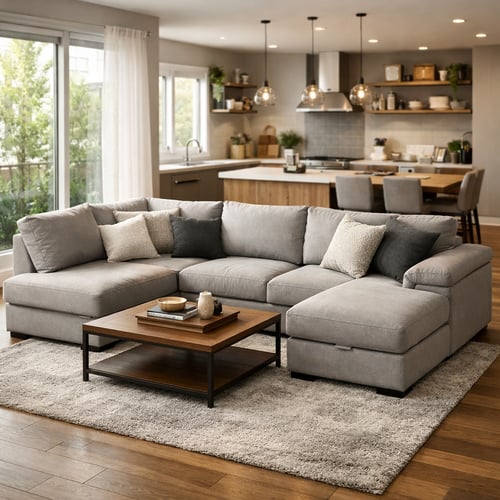
Corner sofas – generous seating for modern living
If the traditional image of a settee sofa is a neat, upright two-seater against a wall, a corner sofa sits at the opposite end of the spectrum entirely. It maximises seating, anchors the room, and often includes practical features like under-seat storage or a pull-out sleeping area - making it as functional as it is comfortable. Corner sofas work particularly well in open-plan spaces, where a well-placed L-shape naturally separates the seating area from the rest of the room.
At Dako, our corner sofas come in sizes ranging from around 200 cm up to 330 cm wide, in configurations including universal, left-facing, and right-facing options to suit any layout. Many models also come with a built-in sleeping function and storage underneath, so the sofa works harder without taking up any additional space.
Does a sofa need a sleeping function?
Not every household needs a sofa bed, but it is worth considering before ruling it out entirely. A sofa with a sleeping function adds genuine versatility to a living room - particularly useful for those who host guests regularly or live in a smaller home where a dedicated spare bedroom is not an option. Sleeping areas typically range from around 100 x 175 cm up to 135 x 250 cm, which comfortably accommodates most adults. If versatility matters to you, this is one feature that is easy to underestimate until it is actually needed.
Key things to check before buying a sofa
A sofa is one of the most used pieces of furniture in any home, so taking a few practical steps before committing to a purchase is always worthwhile. Measuring carefully and thinking through the layout in advance prevents the most common and most avoidable mistakes.
Practical checklist before buying:
- Room dimensions - measure the space carefully, including doorways and hallways the sofa needs to pass through
- Seating capacity - consider how many people use the room regularly, not just on occasion
- Sleeping function - if the sofa doubles as a guest bed, check the sleeping area dimensions before buying
- Fabric choice - lighter fabrics open up a room visually but may require more upkeep over time
- Configuration - corner sofas work best where two walls can anchor the arrangement comfortably
What size corner sofa fits your room?
Corner sofas typically range in width from around 200 cm up to 330 cm, so measuring your available wall space before browsing makes the search considerably more focused. A universal configuration offers the most flexibility, while left- and right-facing options suit rooms where one layout clearly works better than the other.
Sofa or settee – the word changes, the choice stays the same
So what is the difference between a sofa and a settee in practical terms? Nothing at all - and that is precisely the point. Whether you call it a sofa or settee, what matters is finding the right size, configuration, and fabric for your space. We stock sofas from compact two-seaters to large corner configurations with built-in storage, all available for home delivery across the UK. Whatever word feels most natural, the right seat is waiting.
Explore more topics:
- What colours go with a black sofa? Styling tips for 2025
- How to clean a suede sofa: everything you need to know about removing stains
- What colour goes with a brown leather sofa? The ultimate guide to stylish pairings
- What colours go with a grey sofa? Tips for a chic living room
- How to style cushions on a sofa: simple tricks for a cosy look
Author: Dako Furniture Team