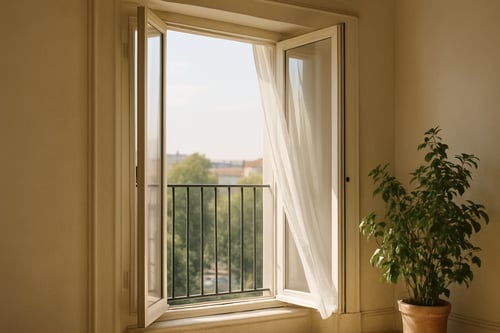
A Juliet balcony is one of those architectural details that makes an immediate impression from both inside and outside a building. It adds light, character, and a sense of openness to a room without requiring the space or structural work of a full balcony. If you have been wondering what it involves, how it works, and whether it suits your home, this is where to start!
The Juliet balcony explained
What is a Juliet balcony, in the most straightforward terms? It is a railing or balustrade fitted directly in front of a full-height window or door opening, without any platform or floor space extending beyond the building's exterior wall. The doors open outward onto the railing, allowing fresh air and light to flood into your room - but there is no usable outdoor space to step onto. If you want to make the most of that connection between inside and outside, a garden bistro sets on the terrace or patio below turns the space beneath into somewhere genuinely worth looking down at.
The juliet balcony meaning comes from the famous balcony scene in Shakespeare's Romeo and Juliet - a decorative railing at an upper window rather than a proper projecting platform. If you are considering one for your own home, you are in good company - the feature has become a popular architectural choice in both period properties and contemporary new builds.
Why homeowners choose a Juliet balcony?
A juliet style balcony offers a compelling set of advantages that a standard window simply cannot match. The most immediately noticeable is the light - floor-to-ceiling doors with a railing in front allow significantly more natural light into your room than a conventional window, which transforms how the space feels throughout the day. Rooms that previously felt dark or enclosed take on an entirely different quality once a Juliet balcony is installed.
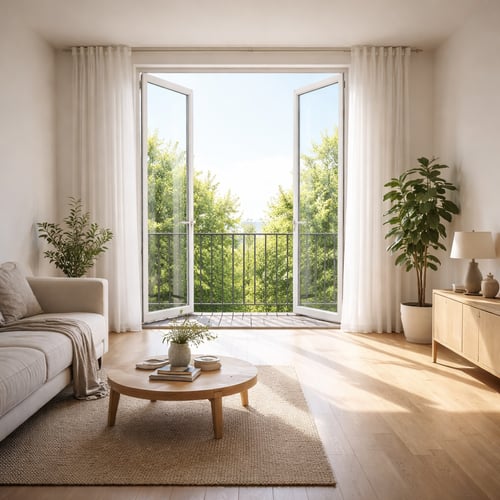
The main reasons people choose to install a Juliet balcony:
- Natural light - full-height glazed doors let in considerably more light than a standard window opening
- Ventilation - opening the doors creates a full-width airflow that smaller windows cannot replicate
- Views - the unobstructed glazing frames the outside view in a way that makes it feel like part of the room
- Kerb appeal - from the outside, a well-chosen railing adds architectural interest and character to a plain elevation
- Space efficiency - all the visual benefits of a balcony without the structural requirements or loss of outdoor space below
Juliet balcony design: materials and styles
The railing is the defining design element of any Juliet balcony, and the material you choose shapes the entire character of the feature. Wrought iron with decorative detailing reads as period and romantic - a natural fit for older or more traditional properties. Powder-coated steel in a clean, flat profile suits contemporary architecture, where the emphasis is on the glazing rather than the railing itself.
Glass balustrades have become one of the most popular choices for modern Juliet balconies precisely because they disappear visually, allowing the doors and the view beyond them to take centre stage. The choice of material is the single decision that most affects how the Juliet balcony reads from both inside and outside the building. Timber railings offer warmth and character that suits garden-facing rooms particularly well - painted hardwood in white or soft grey sits beautifully against brick or render and ages gracefully with relatively little maintenance.
Juliette balcony vs full balcony: which makes more sense?
The distinction between a juliette balcony and a full projecting balcony is more significant than it might initially appear. A full balcony requires structural support from the building's frame, planning permission in most cases, and a meaningful budget for construction. A Juliet balcony, by contrast, is typically a much simpler installation - modifying an existing window opening, fitting the doors, and installing the railing. In most cases it falls within permitted development rights rather than requiring full planning consent.
Rooms that benefit most from a Juliet balcony
Juliet balconies work best in rooms where the combination of light, ventilation, and views makes the greatest difference to how your space feels. Bedrooms are the most common application - the full-height opening creates a sense of space and connection to the outside that transforms the quality of the room, particularly on upper floors where privacy from the street is less of a concern.
Rooms where a Juliet balcony makes the most noticeable difference:
- Bedrooms - the full-height opening adds light and a sense of space that standard windows rarely achieve
- Living rooms - particularly effective in rooms that face a garden or open view, especially when a garden table and chairs set below completes the indoor-outdoor connection
- Kitchen extensions - a Juliet balcony on a rear extension brings light into what is often the darkest part of the house
- Home offices - the connection to the outside reduces the closed-in feeling that working in an interior room can produce
- Loft conversions - full-height doors with a railing are one of the most effective ways to bring light into a converted loft space
Style directions worth considering
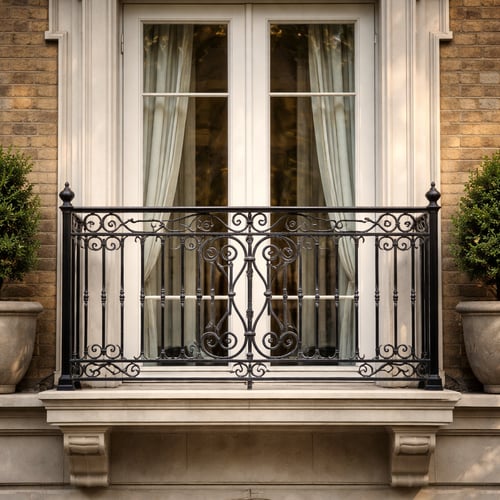
The classic iron railing
Ornate wrought iron with scrollwork and vertical bars is the most traditional interpretation of the juliette balconies concept. It suits Victorian, Georgian, and Edwardian properties where decorative metalwork is already part of the architectural vocabulary. Painted black or dark charcoal, it reads as confident and classic without feeling heavy or dated. If your home already has period detailing, this is the option most likely to feel like it was always meant to be there.
The contemporary glass panel
A frameless or semi-frameless glass balustrade suits modern architecture and any property where the goal is to maximise the view and minimise visual interruption. The glass disappears from both inside and outside the building, making it the most versatile option across different property styles. It is particularly worth considering if your view is the main reason you want a Juliet balcony in the first place.
The painted timber railing
Hardwood painted in white, off-white, or a soft heritage tone suits cottages, farmhouses, and garden-facing rooms where warmth and character matter more than a sleek contemporary profile. It is the most domestic of the three directions, and if your property leans traditional, this is likely the option that will feel most natural.
Is a Juliet balcony right for your home?
A Juliet balcony changes how a room feels in a way that is difficult to fully appreciate until you experience it. The combination of light, air, and visual connection to the outside transforms an ordinary room into something considerably more special - without the structural complexity or planning hurdles of a full projecting balcony. And if the view below deserves to match the view from above, take a look at our garden furniture range - because what's a juliet balcony without something worth looking down at!
Explore more topics:
Author: Dako Furniture Team