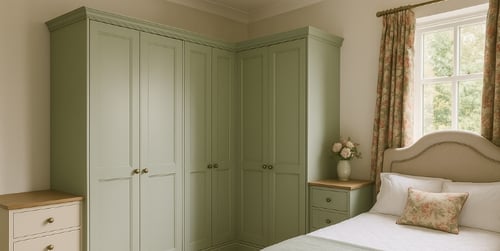
A small bedroom does not have to mean compromising on storage - it just means being more deliberate about where that storage goes and how it works. The right wardrobe can transform a cramped, cluttered room into a space that feels calm, organised, and genuinely comfortable to live in. If your bedroom is on the smaller side, this guide will help you find solutions that work with the space rather than against it!
What is the best wardrobe for a small bedroom? There is no single design that suits every layout. The right choice depends on which dimension is most limited. A narrow wardrobe can work well where wall width is restricted, while a shallow wardrobe is more practical in a very tight room where a standard-depth model would obstruct the walkway.
Why the wardrobe decision matters most in a small room
Small bedroom wardrobe ideas that work share one quality: they treat the wardrobe and the room as a single decision rather than two separate ones. The wrong choice - too wide, too tall, or poorly positioned - makes the room feel instantly cramped, while the right one makes the same space feel considerably more generous. Wardrobes should dissolve into the room’s architecture, turning a bulky necessity into a quiet, functional backdrop.
The door type that changes everything
The single most effective change in a small bedroom is switching from hinged to sliding doors. A hinged wardrobe door needs clearance in front of it to open, which in a small bedroom makes the entire room feel awkward to navigate. A sliding door wardrobe eliminates that clearance requirement entirely and immediately frees up usable floor space.
Mirrored sliding door wardrobes take this one step further. The mirror reflects light back into the room, making the space feel larger and brighter without any structural changes - and removes the need for a separate full-length mirror entirely. Our sliding door wardrobes are available in widths from around 120 cm up to 255 cm, with a standard height of around 215 cm.
A compact wardrobe with sliding doors combines a smaller footprint with easy access, while a taller space saving wardrobe makes better use of vertical space. Before choosing, measure not only the available wall but also the distance between the wardrobe, bed and other furniture so that the room remains comfortable to move around.
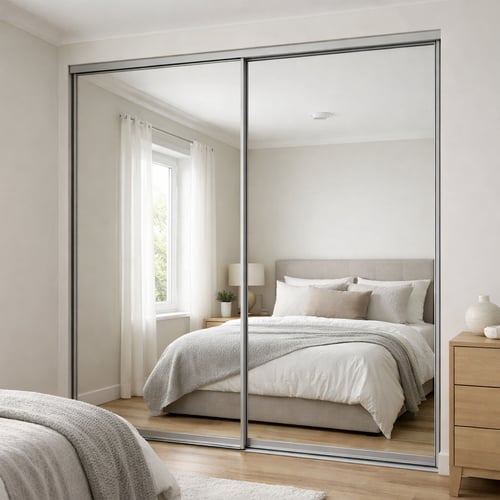
Why sliding doors work so well in smaller bedrooms:
- No door clearance needed - the doors slide rather than swing, keeping floor space fully usable
- Mirrored options - reflect light and create the illusion of a larger, brighter room
- Clean sightlines - the flat door profile keeps the room looking uncluttered and visually calm
- Wide size range - available in multiple widths to suit rooms where every centimetre matters
Fitting the wardrobe to your layout
Not every small bedroom has the same shape, and the best wardrobe solution depends on the specific layout of the room. A narrow bedroom calls for a different approach than a square one, and a room with an awkward alcove presents different opportunities than one with a long, unbroken wall. When looking at wardrobes for small room layouts, good wardrobe design is ultimately about balancing capacity with circulation space rather than simply choosing the smallest piece available.
The most effective configurations for small bedrooms:
- Single wall wardrobe - one wardrobe along the longest available wall maximises storage without dividing the room
- Corner wardrobe - uses an otherwise awkward corner efficiently, useful in L-shaped or irregular rooms
- Alcove wardrobe - fitted into an existing recess, it uses dead space without encroaching on the main floor area
- Modular wardrobe - individual units configured to fit unusual wall widths or work around obstacles
- Over-door storage - a slim unit above the door makes use of vertical space that is almost always wasted
Think height before width
In a small bedroom, floor space is the scarcest resource, which makes vertical space the most underused one. A wardrobe that reaches close to the ceiling stores significantly more than one that stops at a standard height, without taking up any additional floor area. If your wardrobe does not reach the ceiling, the gap above it is storage waiting to be used.
How colour affects the sense of space
A white or light grey wardrobe against a pale wall effectively disappears into the background, keeping the room feeling open and uncluttered. Darker wardrobes, while stylish in larger rooms, tend to advance visually in a small space and make it feel smaller than it actually is. Keeping the wardrobe finish close to the wall colour is one of the simplest ways to make a room feel larger without changing anything structural.
Making the bed work harder
Storage for small bedroom layouts works best when the bed and wardrobe are treated as part of the same system. A bed with integrated drawers or lift-up storage can replace the need for a chest of drawers entirely, freeing up wall space for a wardrobe that actually fits the room. Treating storage as a whole-room problem rather than a furniture problem is the shift that makes the biggest difference.
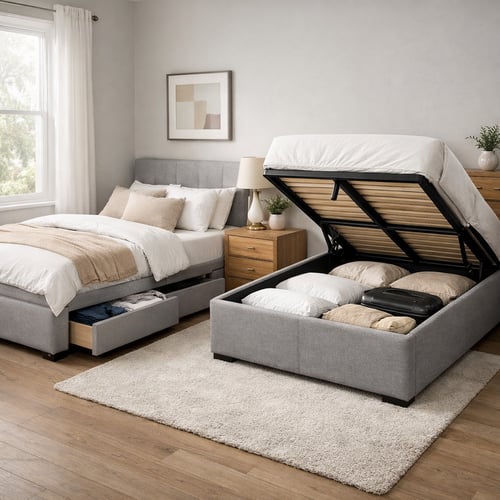
What to look for in a storage bed
Not all storage beds offer the same capacity or accessibility. Drawer beds suit everyday items that need to be reached quickly, while ottoman-style lift-up beds reveal a large, open cavity beneath the mattress - better suited to bulkier items like spare bedding or luggage. In a small bedroom, the ottoman option often makes more sense, as it maximises every centimetre of the base without requiring clearance on the sides for drawer access.
Storage ideas for small bedroom: beyond the obvious
Wardrobe for small bedroom layouts aside, walls, door backs, and the space above furniture all offer storage potential that is frequently overlooked. Space saving bedroom ideas that address both physical storage and visual clutter produce results that feel genuinely transformative.
Practical bedroom space saving ideas worth trying:
- Go tall, not wide - a taller, narrower wardrobe takes up less floor space than a shorter, wider one with the same volume
- Use the door - hooks or an over-door organiser turns dead space into useful storage instantly
- Keep the floor clear - even a small amount of visible floor space makes a room feel larger than it is
- Limit freestanding pieces - every additional item reduces the sense of space, so each piece should earn its place
Knowing how to organize a small bedroom is just as important as choosing the wardrobe itself. Start by using the full internal height. Shelves above the hanging rail are useful for less frequently used items, while baskets or drawers beneath shorter garments can prevent valuable lower space from being wasted.
If possible, divide the wardrobe according to how often you use each item. Keep everyday clothes at an easy-to-reach height, move seasonal pieces to upper shelves or storage boxes and use hanging organisers for accessories. A well-planned small wardrobe can often hold considerably more than expected when every section has a clear purpose. The same principle applies to the rest of the bedroom: keeping as much storage closed and consolidated as possible reduces visual clutter and creates a calmer overall interior design.
Finding the right fit for your bedroom
Bedroom space saving ideas only work when the furniture suits the room. Storage solutions for small bedrooms come down to width, depth, and door type. Width should match the available wall space, and depth is worth checking carefully - a standard wardrobe runs around 60 cm deep, which in a very narrow room can feel intrusive. The right wardrobe does not just fit the room but works with it, making the space feel more considered and more comfortable to live in every day.
A narrow wardrobe has a reduced width and is useful where only a small section of wall is available. A shallow wardrobe reduces the depth instead, making it particularly useful in long, narrow bedrooms where maintaining a comfortable walkway is the priority. You may also see the term thin wardrobe used when searching for especially compact furniture. In practice, always check the actual width and depth rather than relying on the product name alone. Even a difference of a few centimetres can matter in a very small bedroom.
Corner Wardrobe Ideas for a Small Bedroom
The best corner wardrobe ideas for small bedroom layouts make use of an area that might otherwise remain empty. A corner unit can be particularly effective in square rooms, L-shaped layouts or spaces where doors and windows break up the usable wall area.
Before choosing one, check how easily you can access the deepest section of the wardrobe and whether the doors interfere with the bed or nearby furniture. In some rooms, a conventional straight wardrobe along one wall will still provide better storage and easier access, so the corner layout should solve a genuine space problem rather than simply fill an empty corner.
Common mistakes that make small bedrooms feel smaller
Even with the right wardrobe in place, a few habits consistently undermine the effort. Knowing what to avoid is just as useful as knowing what works - and most of these are easy to fix once you are aware of them.
The most common mistakes to avoid:
- Choosing a wardrobe that is too deep - a depth of 60 cm is standard, but in a very narrow room even a few centimetres less makes a noticeable difference
- Ignoring the door swing - hinged doors need clearance that a small bedroom often cannot spare, making sliding doors the more practical choice
- Leaving the ceiling gap empty - the space above a wardrobe is some of the most accessible storage in the room and is almost always wasted
- Adding too much freestanding furniture - every additional piece reduces the sense of space, so storage should be consolidated rather than spread across multiple items
- Choosing dark finishes - a dark wardrobe in a small room advances visually and makes the space feel noticeably smaller
How to keep a small bedroom feeling calm
Good storage is only half the job. A small bedroom that is well organised but visually busy still feels cramped - which is why how the room looks matters just as much as how much it holds. Keeping surfaces clear, limiting decorative items, and choosing furniture in a consistent finish all contribute to a room that feels calm and considered rather than merely tidy. Wardrobe for small bedroom choices made with both storage and aesthetics in mind always produce better results than those made on capacity alone.
Some small dressing room ideas can work even without a separate walk-in wardrobe. An alcove fitted with rails and shelving, a recessed wardrobe or a floor-to-ceiling storage zone can create a dedicated dressing area without using an entire room.
Explore more topics:
Author: Dako Furniture Team