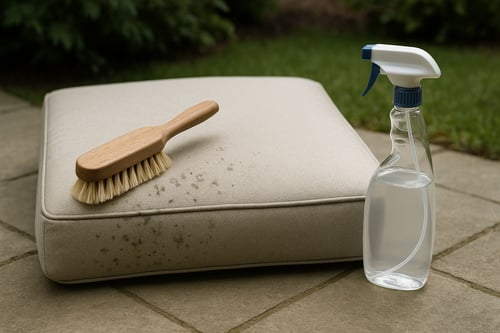
Outdoor cushions face constant exposure to dust, pollen, rain, and sun. Over time, they lose their fresh appearance and develop stains or unpleasant odours. Understanding how to clean outdoor cushions properly restores their look and extends their lifespan significantly. Whether dealing with light surface dirt or stubborn stains, the right cleaning approach makes all the difference. Regular maintenance takes just minutes but keeps your garden seating comfortable and inviting throughout the season.
How to clean outdoor cushions and keep them fresh
Start by removing loose dirt and debris with a brush or vacuum cleaner. This initial step prevents grinding dirt deeper into fabric fibres during washing. For routine cleaning, mix warm water with mild dish soap in a bucket. Dip a soft brush into the solution and scrub the cushion surface gently, working in circular motions. Pay extra attention to areas that see the most contact, like seat centres and armrests.
Rinse thoroughly with clean water from a garden hose, making sure all soap residue washes away. Soap left in fabric can attract more dirt and create sticky spots. After rinsing, squeeze out excess water gently without twisting, which can damage cushion filling. Stand cushions on their edges in a sunny, well-ventilated spot to air dry completely before putting them back on furniture.
Quick cleaning methods for busy schedules
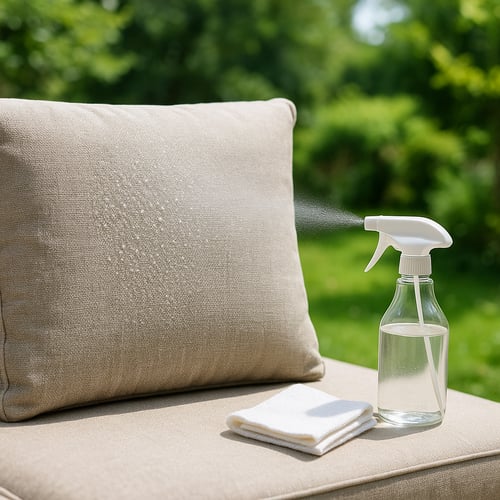
For light refreshing between deep cleans, spray cushions with a mixture of water and white vinegar. This simple solution neutralises odours and removes light surface stains. Let it sit for 10 minutes, then wipe with a damp cloth. This method works particularly well for how to clean waterproof outdoor cushions that just need a quick refresh rather than a full wash.
Cleaning outdoor cushions: the natural vs chemical way
Natural cleaning solutions offer effective results without harsh chemicals. White vinegar mixed with water removes most stains and kills bacteria naturally. Baking soda works brilliantly on tough spots – sprinkle it on the stain, add a bit of water to form a paste, let it sit for 15 minutes, then scrub gently. Lemon juice provides natural bleaching action for lighter fabrics, helping restore original colours.
Commercial cleaners designed for outdoor fabrics deliver powerful results on stubborn stains. Look for products specifically formulated for outdoor use, as they won't damage weather-resistant finishes. Always test any cleaner on a hidden area first to check for colour fading or fabric damage. Follow product instructions carefully, particularly regarding dilution ratios and contact time.
Both approaches have their place in cushion maintenance:
- Natural methods are gentle and eco-friendly
- Commercial cleaners tackle severe stains more effectively
- Natural solutions cost less and use household items
- Chemical cleaners work faster on tough problems
- Natural options are safer around children and pets
Choosing the right method for your cushion type
Different fabrics respond better to specific cleaning approaches. Canvas and polyester cushions handle both natural and chemical cleaners well. Delicate or vintage fabrics benefit from gentler natural solutions. When dealing with rattan garden furniture cushions, consider the cushion material rather than the furniture type when selecting your cleaning method.
How to wash outdoor cushion covers in washing machine - is it really possible?
Many outdoor cushion covers can go in the washing machine if care labels permit it. Check labels carefully before washing – some materials shrink or lose their water-resistant coating in machines. Remove covers from cushion inserts and close all zips to prevent snagging. Use cold or lukewarm water on a gentle cycle with mild detergent, avoiding bleach unless specifically recommended.
Skip the tumble dryer, as high heat damages many outdoor fabrics and can cause shrinking. Instead, hang covers to air dry in a shaded spot. Direct sunlight while drying can fade colours, so choose a covered area with good air circulation. Covers dry faster when draped over a washing line or drying rack rather than laid flat.
How to remove mould from garden cushions without damaging the fabric
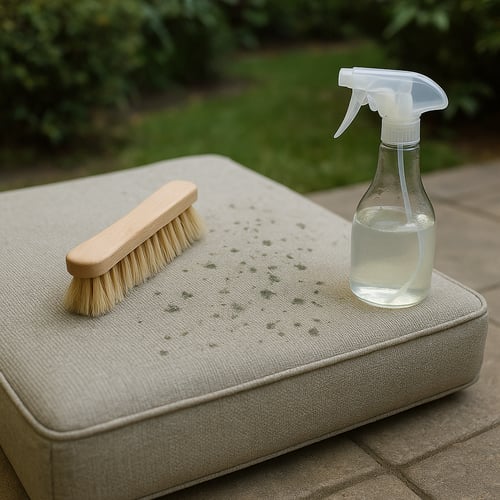
Mould appears as black or green spots on cushions left in damp conditions. Act quickly when you spot it, as mould spreads rapidly and becomes harder to remove over time. Brush off loose mould outdoors wearing a mask to avoid breathing spores. Mix one part white vinegar with one part water in a spray bottle and apply generously to affected areas.Let the vinegar solution sit for at least 30 minutes to kill mould spores. Scrub with a stiff brush, then rinse thoroughly with clean water. For stubborn mould, create a paste with baking soda and water, apply it to remaining spots, and let it work for another 15 minutes before scrubbing again. Dry cushions completely in direct sunlight, which naturally kills any remaining spores.
Prevention stops mould before it starts:
- Store cushions indoors during wet weather
- Use waterproof storage boxes for long-term storage
- Ensure cushions dry completely after rain
- Position furniture in areas with good air circulation
- Apply fabric protector spray at season start
Dealing with common outdoor cushion stains
Different stains require specific approaches for best results. Food and drink spills should be blotted immediately with a clean cloth – never rub, as this pushes the stain deeper. For grease marks, sprinkle baking soda on the spot to absorb oil before cleaning. Bird droppings need to dry completely before brushing off, then treat the area with soapy water.
Common stain removal techniques include:
- Wine and juice: white vinegar solution followed by soap and water
- Grease and oil: dish soap applied directly to the stain
- Grass stains: rubbing alcohol dabbed with a cloth
- Mud: let it dry completely, brush off, then wash normally
- Sunscreen marks: mild detergent with warm water scrub
Protecting cushions from weather damage
Weather takes a toll on outdoor furniture cushions over time. UV rays fade colours and weaken fabric fibres, while moisture encourages mould and mildew growth. Position your seating in partially shaded areas when possible to reduce sun exposure. Use weatherproof furniture covers during storms or when furniture won't be used for several days.
Simple protection measures make a significant difference:
- Bring cushions inside during heavy rain
- Store them in covered areas overnight
- Use UV-resistant fabric spray seasonally
- Flip cushions weekly for even wear
- Keep them elevated for air circulation underneath
Outdoor furniture cushions: care tips to make them last year after year
Regular maintenance extends cushion life dramatically. Brush or shake cushions weekly to remove loose dirt, and rotate them every few weeks for even wear. Apply fabric protector spray at the beginning of each season, and store cushions in breathable containers during winter months. At Dako Home, we design our garden sofa sets with durable, easy-care cushions that maintain their comfort and appearance with minimal effort, giving you more time to enjoy your outdoor space.
Explore more topics:
Author: Dako Furniture Team