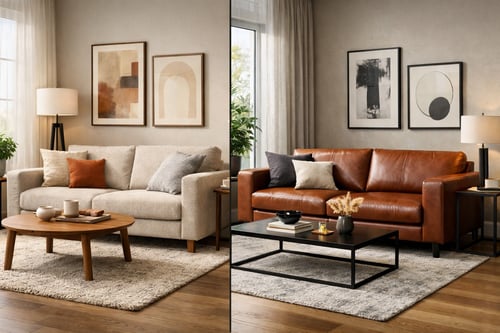
Choosing between a fabric sofa and leather sofa feels overwhelming when both offer distinct advantages! The right decision depends on your lifestyle, budget, and aesthetic preferences rather than one material being universally superior. From maintenance requirements to climate considerations, UK homes present specific challenges that affect which material works best for you. Discover which option suits your space and daily life perfectly!
Fabric vs leather sofa: the complete comparison
The fabric vs leather sofa debate centres on several key factors that affect your daily living. Each material excels in different areas, making the “best” choice highly personal. Fabric offers variety, affordability, and cosy warmth that many UK homeowners prefer. Leather brings sophistication, easy cleaning, and longevity that justifies its higher price point for some buyers.
Comfort showdown: is a fabric or leather sofa more comfortable?
Comfort is subjective, but texture differences are undeniable. Fabric sofas feel soft and welcoming from the first sit, with various textures from smooth cotton to plush velvet. The material gives slightly, creating a cosy embrace that many find instantly relaxing. Fabric also breathes better, preventing the sweaty feeling that can occur with leather in warm weather.
Leather sofas feel firmer initially, requiring a break-in period to soften and mould to your body. Once broken in, quality leather becomes incredibly comfortable. However, leather feels cold to bare skin initially, which can be off-putting in chilly UK mornings.
Style and aesthetics
Both materials offer diverse style options suited to different interior design approaches. Fabric sofas provide endless colour and pattern choices, from bold florals to subtle textures. Modern performance fabrics now mimic luxury textures while offering practical benefits.
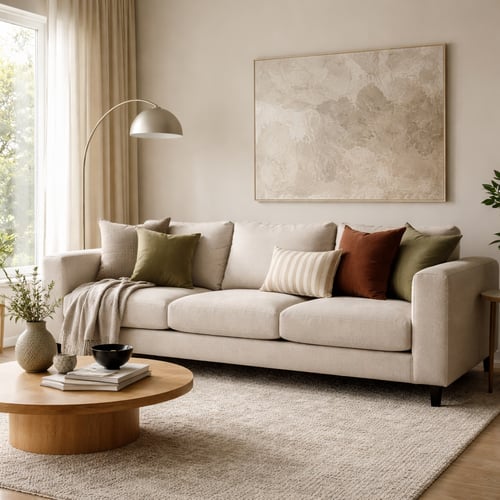
Popular fabric sofa styles include:
- Velvet for glamorous, jewel-toned elegance
- Linen for relaxed, coastal-inspired spaces
- Bouclé for textured, contemporary appeal
- Chenille for soft, family-friendly comfort
- Performance fabrics combining style with stain resistance
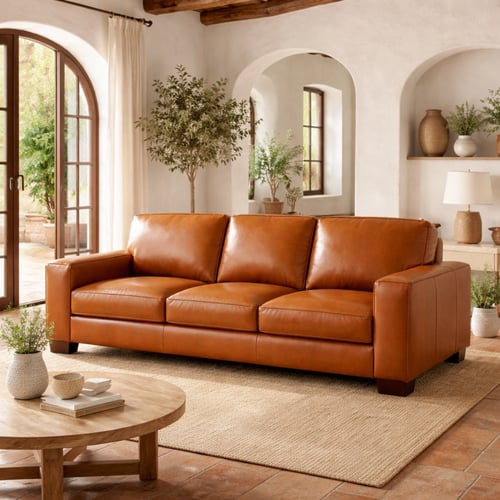
Leather sofas exude timeless sophistication and age gracefully, developing a patina that many find appealing. Brown leather suits traditional and rustic interiors, while black or grey leather works beautifully in modern spaces. The material's natural variations mean each piece is unique, adding character that fabric cannot replicate.
Durability and maintenance
Fabric vs leather sofa durability depends largely on quality and care. High-quality fabric with tight weaves and performance treatments resists wear, staining, and fading remarkably well. However, fabric can pill, snag, or absorb odours over time. Regular vacuuming and prompt stain treatment maintain fabric sofas, while removable covers allow you to wash or replace them as needed.
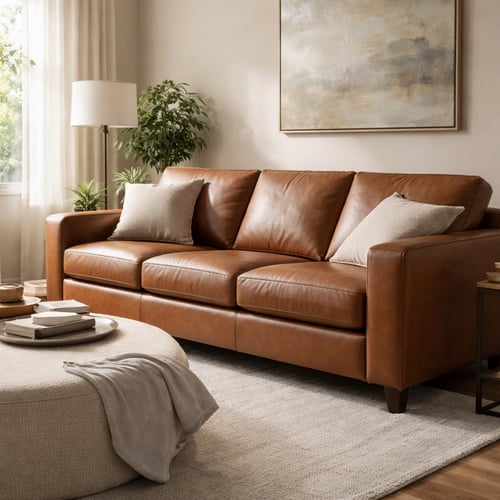
Leather requires different maintenance, but often outlasts fabric when properly cared for. Quality leather resists punctures and tears better than most fabrics, though it can scratch. Regular conditioning keeps leather supple and prevents cracking. Spills wipe away easily from leather surfaces, making quick cleanup simpler than fabric stain removal.
Maintenance comparison:
- Fabric: vacuum weekly, treat stains immediately, professional clean annually
- Leather: condition every 6-12 months, wipe spills quickly, avoid direct sunlight
- Fabric: removable covers allow machine washing
- Leather: scratches can sometimes be buffed out
- Fabric: may need replacing after 7-10 years
- Leather: can last 15-20+ years with proper care
Cost comparison
Initial purchase price varies significantly between materials and quality levels. Budget fabric sofas start around £400-600, while mid-range options cost £800-1,500. Leather sofas typically cost more, with genuine leather mid-range pieces costing £1,500-3,000, and premium full-grain leather exceeding £4,000.
Quick cost breakdown:
- Budget fabric sofa: £400-600 (lifespan 5-8 years)
- Mid-range fabric: £800-1,500 (lifespan 8-12 years)
- Budget leather: £1,000-1,500 (lifespan 10-15 years)
- Premium leather: £2,500-4,000+ (lifespan 15-20+ years)
- Annual cost roughly similar when factoring in longevity
Pet and family-friendly sofas: which material wins?
Homes with children or pets face unique challenges that affect your best sofa material choice. Leather handles spills and accidents better than fabric, as liquids don't immediately absorb. A quick wipe removes most messes before staining occurs. However, pet claws can scratch leather surfaces, creating visible damage that's difficult to repair invisibly.
Performance fabrics designed for family use offer impressive stain resistance and durability. Crypton, Sunbrella, and similar treated fabrics repel liquids and resist staining from food, drinks, and pet accidents. These fabrics work brilliantly for active households with young children. However, pet hair clings to fabric more than leather, requiring more frequent vacuuming. Our selection of sofas includes both family-friendly fabric options and durable leather pieces designed for your real-life use.
Best material for different household situations:
- Cats with claws: durable performance fabric over leather
- Dogs that shed: leather for easier hair removal
- Young children: performance fabric or budget leather
- Multiple pets: microfiber or tightly woven performance fabric
- Allergy concerns: leather or washable-cover fabric
Which sofa is better for allergy sufferers?
Allergy considerations often tip the scales for sensitive individuals. A leather sofa doesn't harbour dust mites, pet dander, or pollen the way fabric does. The smooth, non-porous surface prevents allergen accumulation and wipes clean easily. This makes leather the superior choice for people with respiratory allergies or asthma triggered by dust.
Climate and seasonal considerations for UK homes
British weather patterns affect how materials perform throughout the year. Fabric maintains comfortable temperature in drafty Victorian houses or under-heated flats. The material doesn't conduct heat or cold, feeling pleasant regardless of room temperature. Leather responds to temperature, feeling cold initially in unheated rooms, though modern UK homes with central heating often maintain stable temperatures where this becomes less problematic.
Finding the best sofa material for your needs
Determining which sofa material is best requires honest assessment of your priorities and lifestyle. If you value easy cleaning, plan to keep your sofa for decades, and appreciate developing patina, leather deserves serious consideration. If you prefer cosy texture, want style flexibility, and need removable covers for washing, fabric likely suits your needs better.
Final verdict: which sofa is better for your UK home?
There's no universal winner in the fabric versus leather debate – the best sofa material depends entirely on your specific situation. Families with young children might prefer performance fabric's forgiving nature, while professional couples in modern flats might love leather's sophisticated simplicity. Budget, aesthetic preferences, and long-term plans all influence the right decision. A fabric sofa offers lower entry costs and easier style updates, while leather represents a long-term investment that ages gracefully. Both materials have earned their place in UK homes – choose the one that aligns with how you actually live!
Explore more topics:
Author: Dako Furniture Team